Summary
This AI PDF summarizer widget lets you paste text copied from any PDF and watch extractive sentence scoring work in real time: word frequency, sentence significance, and a length dial for short, medium or long output. It reports words in, words out, percent reduction and estimated reading time saved against a 200 words-per-minute baseline. Nothing uploads: the scoring runs entirely in your browser. Built for researchers, journalists and consultants who need to triage documents before committing to a full read, not to replace close reading of the passages that matter.
See How an AI PDF Summarizer Picks the Sentences That Matter
Paste text from any PDF and this free widget scores every sentence the way extractive AI summarizer tools do, live, in your browser. No upload required.
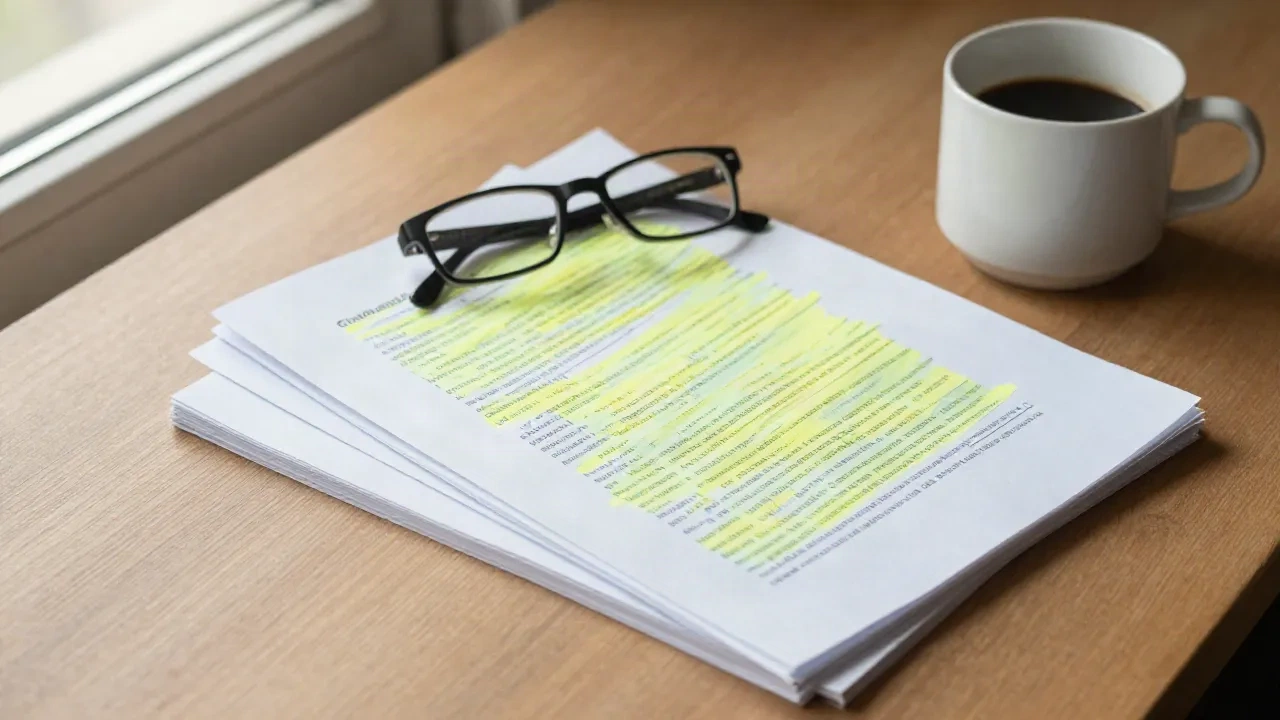
What the AI PDF summarizer actually scores
Frequency scoring
Every word in the pasted text is counted, minus a short list of connecting words ("the", "and", "of"). Words that repeat often across the document score higher, and a sentence's score is the average of its words' scores.
Whole sentences, not new ones
This is extractive summarization: the output is made of sentences lifted verbatim from what you pasted, never rewritten. For citation-sensitive reading, that traceability back to the exact wording matters more than fluency.
Adjustable length, with the math shown
Pick 3, 5 or 8 sentences and the stat row updates: words in, words out, percent shorter, and estimated reading time saved against a 200 words-per-minute baseline. No hidden step between your text and the number.
What a one-page widget cannot do
-
1
It will not read tables, figures or footnotes
The scoring only sees the prose you paste. Numeric tables, figure captions and footnoted asides are either skipped or scored as if they were ordinary sentences, which usually means they get dropped.
-
2
It will not preserve document structure across sections
A 12-page report with five sections gets treated as one pool of sentences. For a document that long, run each section through separately rather than the whole PDF at once, so the summary still reflects each part.
-
3
It will not tell you if a claim is accurate
Extraction ranks sentences by vocabulary weight, not by truth. A confidently wrong sentence and a carefully hedged one can score the same if they share vocabulary with the rest of the document.
Questions about the extraction logic
Is this the same technique full AI PDF summarizer products use?
Does this work on scanned PDFs or photographed pages?
Where does the reading-time estimate come from?
Is my pasted text stored or sent anywhere?
Why does the summary sometimes keep two sentences that say almost the same thing?
Does it work on languages other than English?
What's the practical difference between short, medium and long?
How is this different from an abstract or a table of contents?
Want more AI reading tools like this one?
Aginsi covers AI research summarization tools test by test, comparison by comparison, for people who read for a living.