Objective Summary: How to Write One That Actually Holds Up
Summary
An objective summary presents the main ideas of a text accurately and without personal bias. For researchers, analysts, and consultants working under reading pressure, the ability to produce one quickly is not a minor skill: it is the foundation of reliable synthesis work. This guide covers the definition, a five-step method, the most common traps, and an honest take on when AI summarization tools add speed without sacrificing accuracy.
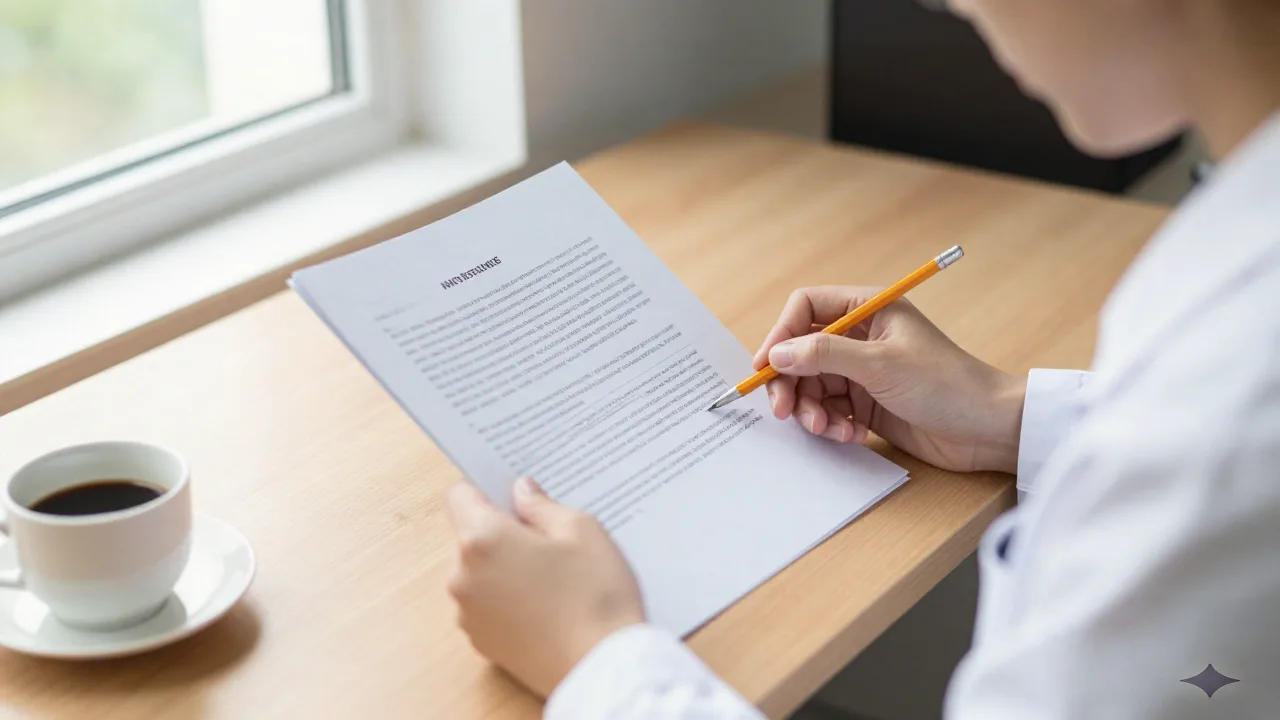
An objective summary is not a shortcut. It is the result of a deliberate reading practice: you understand a source well enough to state what it says, precisely, without smuggling in what you think about it.
For researchers tracking a literature, consultants synthesising policy reports, or journalists checking facts, this distinction matters. A summary that drifts into interpretation, even subtly, becomes unreliable as evidence. The passages that count are the ones the source actually makes, not the ones you expect it to.
What an Objective Summary Actually Is
An objective summary states the main idea of a source and its essential supporting points, written in your own words, without adding judgment or opinion.
Three conditions make it objective:
Factual accuracy: the summary reflects what the source says, not what you read between the lines
Completeness at the right scale: key claims are present; decorative details are not
Voice neutrality: no evaluative language, no hedging that implies doubt, no enthusiasm that implies endorsement
The problem is that most people believe they are being objective when they are not. Words like "interestingly," "surprisingly," or "as expected" are opinion markers dressed as transitions. So are constructions like "the study confirms" (which presupposes validity) versus "the study reports."
Objectivity is not the same as neutrality of tone. You can write in a flat, unemotional register and still produce a summary that misrepresents the source by selecting only the findings you found compelling. The test is not how the text sounds but whether every claim in the summary is traceable to a specific passage in the original.
Where Objective Summaries Differ from Abstracts
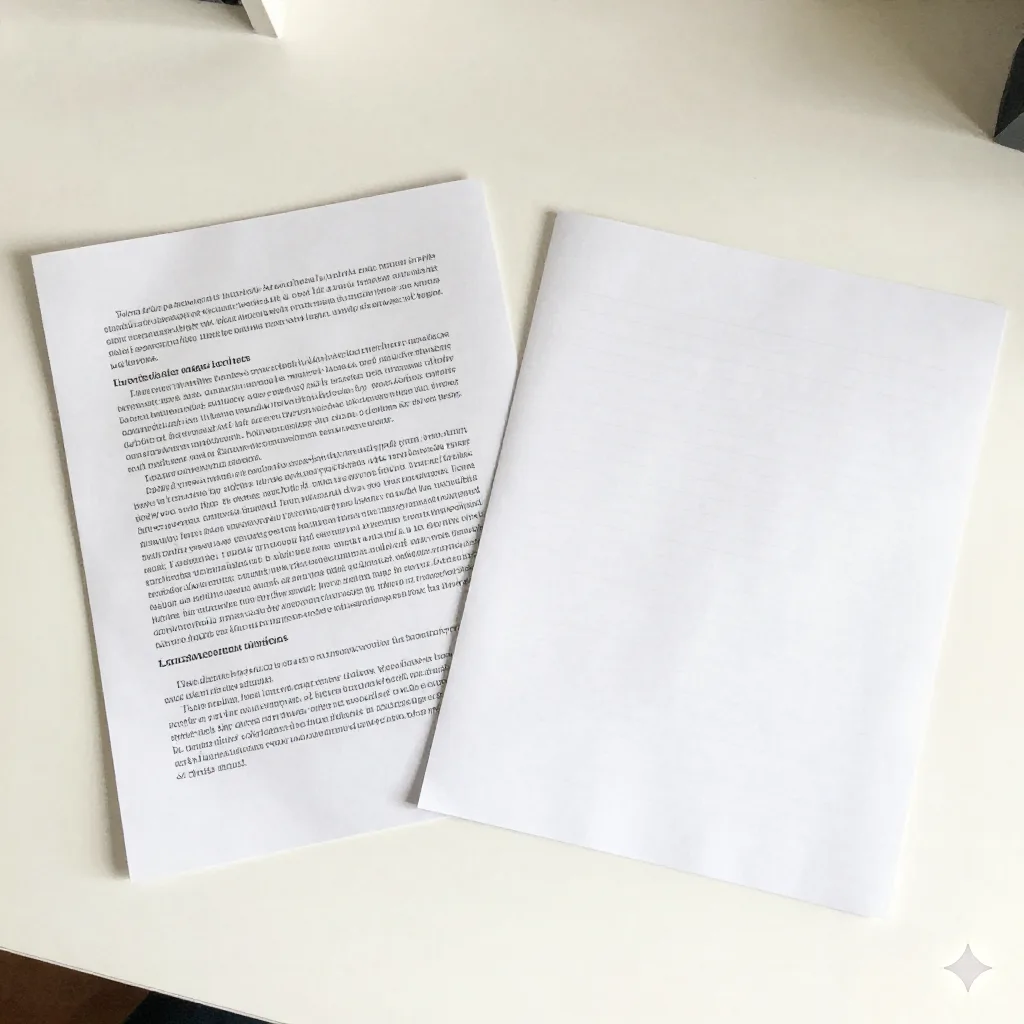
The comparison is worth making because the two are often confused, especially by researchers who encounter both in the same document.
An abstract is written by the author of the original work. Its job is to preview the document and attract the right reader. It follows conventions (250-300 words, structured by purpose/method/findings/conclusion) and is part of the source itself.
An objective summary is written by someone consuming the source. Its job is to capture what the source argues for use in another context: a literature review, a briefing note, a synthesis report. It has no fixed length convention; the right length depends on how much of the original's substance needs to be represented in the downstream document.
The practical test: an abstract asks "what is this paper about?" An objective summary asks "what does this paper claim, and can I rely on my restatement of it?"
This is not a trivial distinction. An abstract is a marketing document for the paper. An objective summary is an analytical tool for the reader. The same paper can generate accurate abstracts and misleading summaries, depending on the summariser's method.
The Five-Step Method That Holds in Practice
This sequence works reliably across document types: academic papers, policy reports, meeting transcripts, journalistic investigations.
1. Read the full source first. Resist the pull to start noting immediately. A first pass builds the context that makes individual claims legible. Researchers working under volume pressure often skip this; the summaries show it.
2. Identify the central claim. Every source worth summarising has one. In a scientific paper it appears in the abstract and conclusion. In a policy report it is often buried in the executive summary's third paragraph. In a long-form article it may not be stated until the penultimate section. Find it before anything else.
3. Locate the two to four points that support or develop that claim. Not every argument in a 40-page document deserves a slot in the summary. Apply a simple test: if you removed this point, would the central claim become harder to evaluate? If no, leave it out.
4. Write in your own words, starting with the source's central claim. Do not open with "This article discusses..." as that construction delays the substance. State the claim directly. Then add the supporting points in the order that makes them clearest, not necessarily the order they appear in the source.
5. Remove every word that marks your stance. Read back through the draft and flag any word that signals how you feel about the source's content. Replace evaluative adjectives with precise ones ("large-scale" instead of "impressive"), replace inference with attribution ("the authors conclude" instead of "this means"), and cut rhetorical transitions entirely.
The Three Errors That Compromise Objectivity
Most summaries that fail do so for one of three reasons.
Compression bias. The writer summarises the parts they found convincing and elides the parts they found weak. The resulting summary is technically accurate but structurally misleading: it makes the source appear stronger than it is. This is common in literature reviews where the researcher is looking for support, not challenge.
Attribution drift. The summary states a finding without attributing it to the source. "Retention improves with active recall" reads as fact. "Smith and colleagues found that retention improved with active recall across three cohorts" reads as evidence. The difference determines whether your synthesis is defensible.
Scope inflation. The summary includes points the source does not actually make, drawn instead from the writer's general knowledge of the field. This is the most consequential error in academic and policy contexts: the downstream reader believes they have a source for a claim that has none. A literature review built on inflated summaries is structurally unsound regardless of the quality of the original papers.
To check for all three: once you have a draft, identify every claim in the summary, locate it in the original, and verify the attribution is explicit. This takes four minutes on a typical document. Skipping it costs credibility.
When AI Summarization Tools Help and When They Do Not
AI models that produce summaries of documents, whether embedded in a PDF reader, a note-taking application, or a standalone synthesis tool, can accelerate the first pass. They will identify the central claim of a well-structured document reliably. They will surface the section headings and, in most cases, the key evidence cited.
The problem is attribution drift and compression bias, which AI systems reproduce systematically. A model trained on human-written summaries inherits human tendencies: it emphasises what a statistically average reader found most interesting, not necessarily what the source's authors considered most important.
For a researcher doing a literature review, this matters. The objective summary of a paper on cognitive load and reading speed should reflect what the study measured, not what an AI model generalised from similar studies. The distinction is between summarising this source and summarising the field: two very different tasks.
The practical position: use AI models to generate a first draft of a summary for documents over 5,000 words. Then run steps 4 and 5 of the method above on that draft. Check attribution on every claim. The combination of AI speed and human verification is faster than either approach alone and more reliable than AI alone.
Skip AI assistance entirely for sources where citation fidelity is critical and the document is under 3,000 words. At that length, reading and summarising directly is faster than reviewing and correcting a generated draft.

Length and Format: What the Context Determines
There is no universal correct length for an objective summary. The right length depends on two variables: the complexity of the source and the function the summary will serve.
For a seminar reading list with twelve papers, a one-paragraph summary (80-120 words) per paper is appropriate, enough to recall the paper's contribution when you return to the list three weeks later.
For a single study that will be cited as primary evidence in a policy brief, a longer summary (250-350 words) covering purpose, methodology, findings, and stated limitations is warranted. The limitations section matters: an objective summary of a study that omits its own authors' stated caveats is not objective.
For a meeting transcript or interview recording, the relevant question is not length but selectivity. What was decided or committed to? What was disputed? Objective summaries of conversations are harder than objective summaries of documents because the central claim is rarely stated explicitly. It emerges from exchange, and identifying it requires judgment about what was resolved versus what was merely discussed.
Reading at Volume Without Losing Precision
The problem most researchers and consultants describe is not that they cannot write an objective summary. It is that they cannot sustain the practice across thirty or forty documents a week without letting standards slip.
Voici ce que l'essentiel dit, sans le bruit: the discipline to slow down at the right moment, and the system that makes slowing down sustainable.
The discipline is methodological: the five steps above, applied consistently, even when you are confident you already know what a paper says. The summary of a paper you think you know is where compression bias is most likely to appear. Familiarity with the field is not a substitute for reading the specific source.
The system is architectural: a structure that separates your summaries from your annotations, that attributes every claim, and that makes it possible to find the source of a claim six months after you wrote the summary. A folder of undifferentiated notes does not constitute such a system. Neither does a highlights export from a PDF reader without attribution anchors.
The problem is not the quantity of sources. It is the tri: deciding which passages count and which do not, and holding to that distinction under pressure. An objective summary is, at its core, a record of that decision. The passages that count are the ones you can still trace to their source when a colleague asks. Everything else is reading without retrieval.