How to Take Notes From a Textbook Without Copying It
Summary
To take notes from a textbook that you will remember, survey the chapter, turn each heading into a question, read one section, then close the book and write its main claim in your own words. Check against the page and fix errors. Choose Cornell, outline or concept maps to fit the material, and review within 24 hours. Quote-check any AI summary before you trust it.
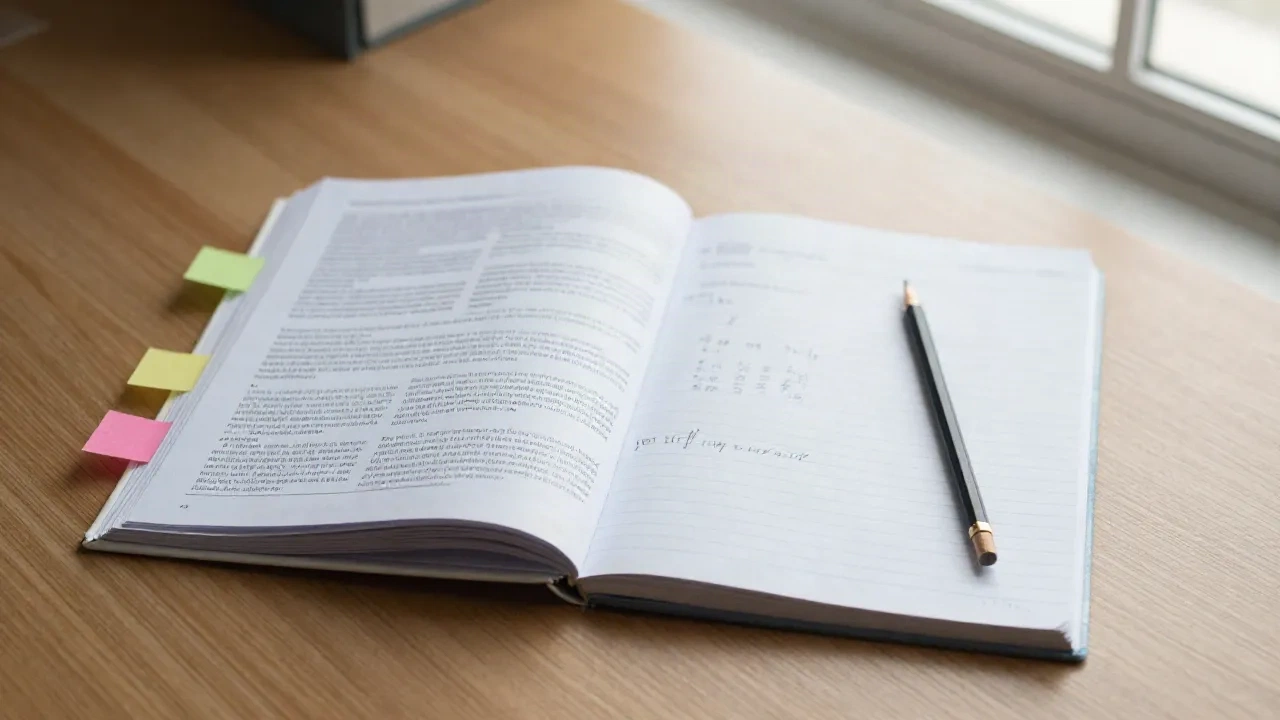
Most people take notes from a textbook by copying it, slowly, in a smaller font. If you want to know how to take notes from a textbook in a way that survives the exam or the literature review, the answer is short: read a section first, close the book, then write what you remember in your own words. Everything else in this piece is detail on that one move.
Why do copied notes feel productive and fail anyway?
A client once showed me a 90-page chapter on public procurement law that she had "noted" in a single afternoon. The notes ran to 41 pages. They were the chapter, minus the footnotes, in her handwriting. She could not answer a single question about it two days later without reopening the book.
The problem is not the quantity, it is the sorting. Copying keeps your hand busy while your judgment sits idle. Nothing in the process forces you to decide what matters, and deciding is the only part that builds memory.
The research agrees with the anecdote, with a caveat worth stating. A 2026 randomized study of 134 teacher candidates in Frontiers in Psychology compared four note-taking methods and their effect on retention. Right after the session, no method beat another. At the later retention test, only the Cornell group scored significantly higher than the group writing plain sentences. The gap appeared with time, not on the day.
That pattern is the useful point. A method can look identical to another while you are doing it and still leave a different trace a week later. So judge your system by what you can recall cold, not by how tidy the page looks.
What should you do before taking a single note?
Spend five minutes surveying the chapter. Read the title, the opening summary, every heading, the figure captions and the end-of-chapter questions. You are building a map, so that each paragraph later has a place to land.
Then turn the headings into questions. "Sources of procurement risk" becomes "Where does procurement risk actually come from?" This is the Q in the classic SQ3R routine (survey, question, read, recite, review), and it is the cheapest upgrade to any method you already use.
Skip this step and you read every sentence as equally important. They are not. Textbooks are written by committee, and a good third of a chapter is context, repetition and hedging.
A practical limit: for a dense chapter, set a reading unit of one section, roughly 3 to 6 pages. Smaller than that and you break the argument apart. Larger and you forget the first half before you write.
How do you take notes while reading, section by section?
The loop is simple and slightly uncomfortable.
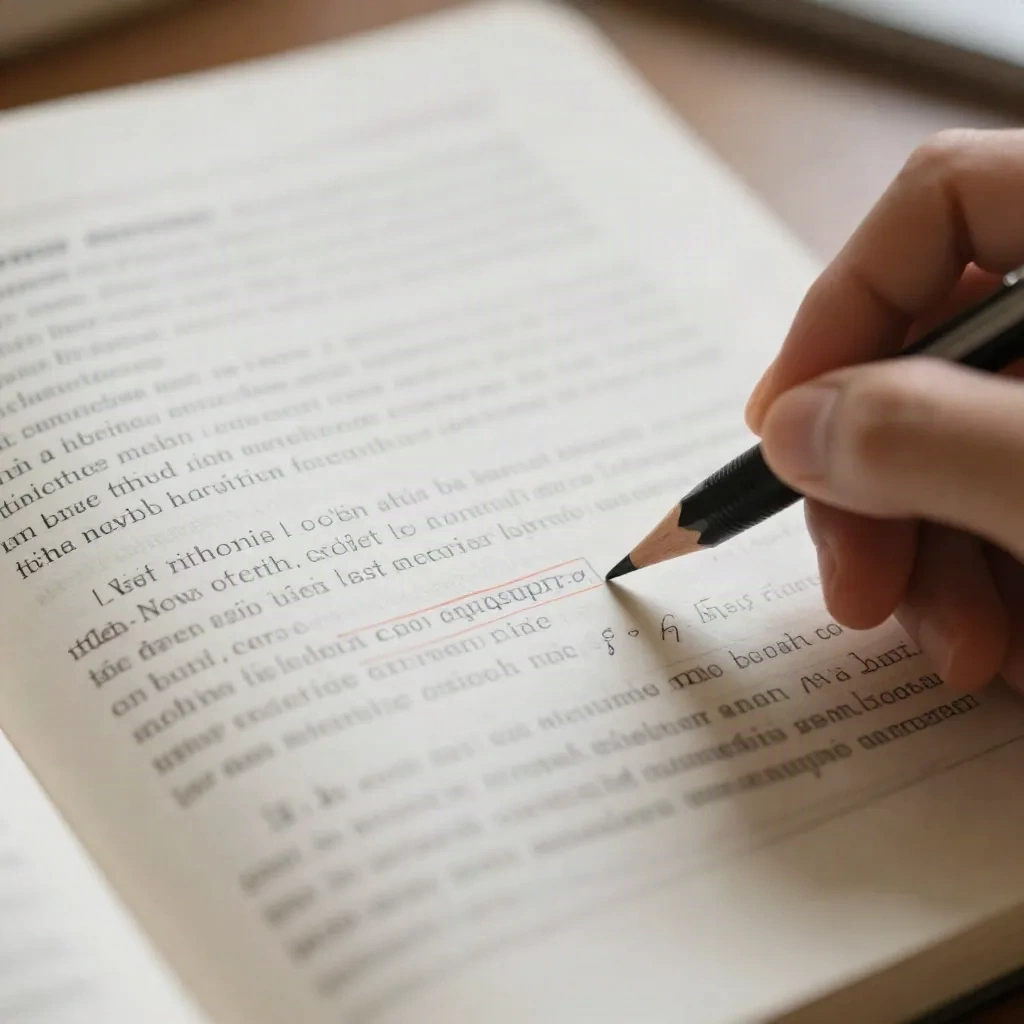
Read one section at normal speed, with a pencil but no highlighter.
Close the book, or look away from the page.
Write the section's main claim in one or two sentences, in your own words.
Add the two or three details that support it: a figure, a definition, an exception.
Reopen the book and check what you got wrong or left out.
Step five is where the learning sits. You will find that you misremembered a number or skipped a condition, and the correction sticks far better than the original sentence would have.
Two habits make this loop hold up. First, write claims, not topics. "Inflation" is a topic. "Inflation erodes fixed-rate debt, which is why lenders prefer variable terms" is a claim. Second, keep a running list of what you could not explain. That list is your real study agenda, and it is usually shorter than you feared.
How much should you write? A workable ceiling is one page of notes for every ten pages of text. Past that ratio you are almost certainly transcribing. Below one page in twenty, you are probably skimming and calling it reading. Check the ratio after your first chapter and adjust once, then stop measuring.
On highlighting: it is fine as a second pass, and poor as a first one. Colour applied while you read marks what felt familiar, not what mattered. Come back after your notes exist, and mark only what your notes missed.
Which note-taking method fits which kind of textbook?
There is no single winner, which is why the competing top-ten lists all disagree. The method should follow the shape of the material.
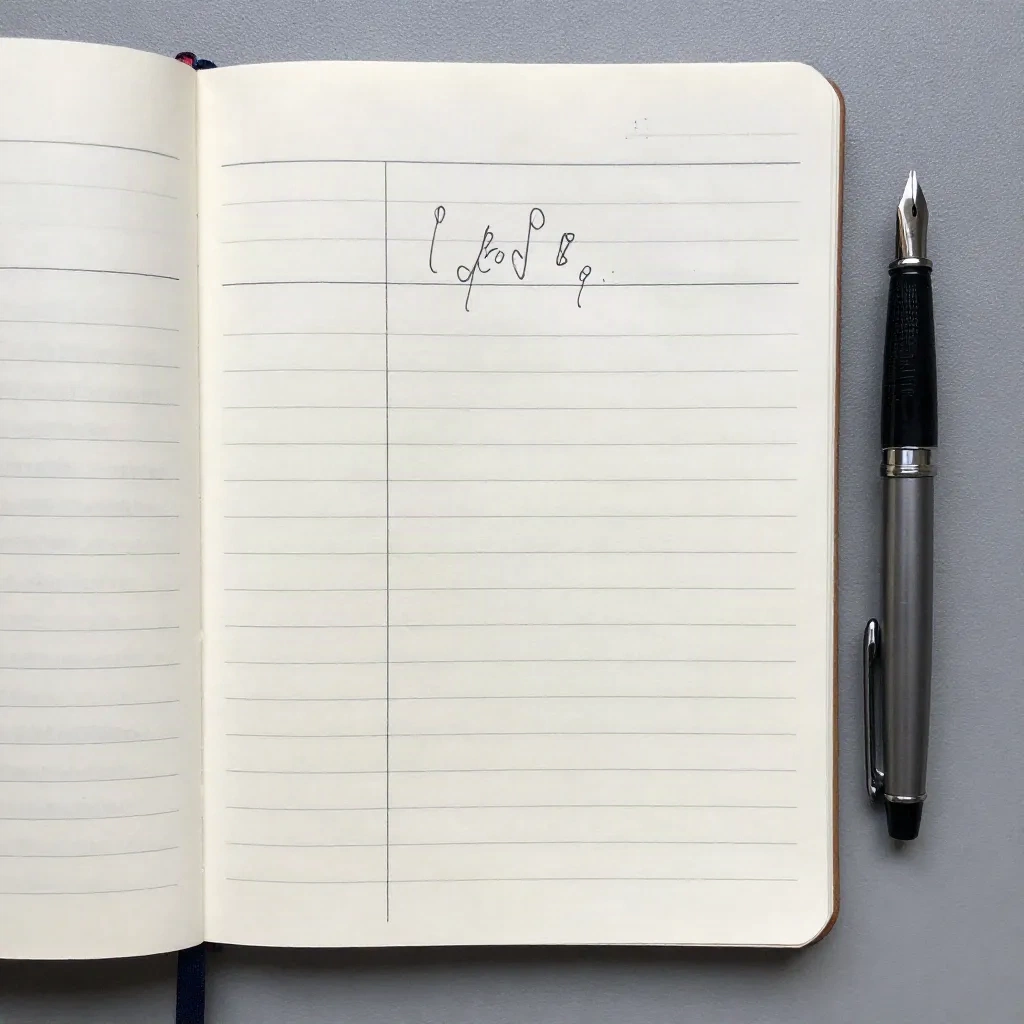
Cornell, for chapters that build definitions and arguments. Rule the page into a narrow cue column on the left, a wide note column on the right and a short summary strip at the bottom. Write notes on the right as above. Afterwards, write a question in the cue column for each block of notes, and write a two-sentence summary at the bottom. Review by covering the right side and answering the cues. In the study above, this was the method with the most durable result, though the sample was teacher candidates, so treat it as a good signal and not a law.
Outline, for hierarchical material. Law, anatomy, taxonomy and regulation chapters are trees. An indented outline mirrors them, and it lets you see at a glance that a subsection has no parent in your notes.
Concept maps, for causal or relational material. Economics, ecology and systems engineering are about how things push on each other. A map with labelled arrows records the relationship, which a list cannot.
Worked-example notes, for quantitative subjects. Do not copy the solution. Cover it, attempt the problem, then write only the step where you got stuck and why.
Skip if you are tempted to choose a method by how it looks on a screenshot. A pretty system you abandon in week two is worse than an ugly one you keep.
Paper or screen: does it change anything?
It changes less than the debate suggests. The same study had a digital group, and it did not separate from the others at the post-test. What differs is friction. Typing is fast enough to transcribe, and transcription is the habit you are trying to break.
If you type, impose a rule that forces compression: no sentence in your notes may be longer than the sentence you are summarizing, and none may reuse more than three consecutive words from the book. It sounds fussy. It works because it makes copying impossible without breaking the rule.
Digital has real advantages for searching and linking. Notes in plain text or a linked database can be recombined across chapters and courses, which is hard on paper. That is why researchers drift toward screens once the notes need to be reused, even when first drafts happen on paper.
Obsidian suits people who want plain Markdown files they own and can link freely.
Notion suits those who prefer databases, with one table of chapters and another of concepts.
Where do AI summaries help, and where do they quietly hurt?
An AI summary of a chapter is a fast first map. Upload the PDF, ask for the structure and the main claims, and you have the survey step done in a minute. For a chapter you will only need to cite, that may be all the reading it deserves.
It becomes harmful the moment it replaces your own recall step. A summary you read is another thing to recognise, not retrieve. The feeling of understanding rises and the memory does not. Use the summary to decide where to spend your attention, then do the close-the-book loop on the sections that matter.
Two practical checks protect you. Ask the tool to quote the passage behind each claim, and verify two or three of them against the page. Tools that paraphrase without pointing back to the text are the ones that smuggle errors into your notes. A summarizer like Aginsi that keeps the source passage attached makes this check a ten-second job instead of a chore.
Readwise Reader sits at the other end of the range: a reading environment where highlights and annotations flow into a review habit, which is the better use of automation.

How do you turn a pile of notes into something you can use?
Notes you never revisit are decoration. Build review into the schedule at the point of writing.
Within 24 hours, cover your notes and answer the cue questions aloud or on paper. After a week, do it again on only the questions you missed. A third pass before the exam, or before you start drafting, is usually enough. Each pass should take a fraction of the original reading time.
For long projects, add one more layer: a single page per chapter that holds the three claims you would defend and one thing you still doubt. Thirty chapters later, those pages are a literature review in outline. That is the structure I use with clients who must digest a shelf of reports in a month.
If your notes live in a searchable app, tag by question and not by topic. A tag called "why-lenders-prefer-variable" retrieves something. A tag called "finance" retrieves a haystack.
Evernote is a reasonable home if you mostly capture from scanned pages and PDFs, because search reaches inside images.
What should you actually do tomorrow morning?
Pick one chapter. Survey it for five minutes and turn the headings into questions. Read the first section, close the book, and write its main claim in your own words. Check it, fix it, and move on.
Do that for one hour and count the pages you produced. Expect fewer than you wrote when copying, and expect to remember more of them. If a method feels slower and slightly annoying, that is usually a sign it is doing the work.
The question left open is how much of the first pass you are willing to hand to a tool. My own answer changes by chapter, and yours probably will too.